Category: fairy tales
Showing posts with label fairy tales. Show all posts

Dragon Small World Play

Monday, March 14, 2016 No comments
When I was at Michael's a few weeks ago (I spend way too much time and money there), I found this really fun Safari Ltd dragon. I needed an excuse to buy it, so I decided that for our Fairy Tales unit, we needed a medieval play tray!


What I Used:

  • Safari Ltd Dragon, Trees Toob & Days of Old Toob 
  • Gold (vase filler)
  • Navy Beans
  • A Few Large Rocks


The kids really enjoyed talking about who all the different people were, and who would be the dragon's "friends" and "enemies." Right away they started making plans together for stealing the dragon's gold and where they would hide it! Higher-level thinking! The boys especially loved this center.


After a few days, I added some blocks that I thought they'd use to build a castle. Instead they built a wall all the way across the table!


Lots of learning about symmetry & balance!


In all small world play, we're covering these Common Core Standards:

CCSS.ELA-LITERACY.SL.K.1
Participate in collaborative conversations with diverse partners about kindergarten topics and texts with peers and adults in small and larger groups.

CCSS.ELA-LITERACY.SL.K.6
Speak audibly and express thoughts, feelings, and ideas clearly.

CCSS.ELA-LITERACY.L.K.1
Demonstrate command of the conventions of standard English grammar and usage when writing or speaking.

CCSS.ELA-LITERACY.L.K.4
Determine or clarify the meaning of unknown and multiple-meaning words and phrases based on kindergarten reading and content.

CCSS.ELA-LITERACY.L.K.5
With guidance and support from adults, explore word relationships and nuances in word meanings.

     -Especially CCSS.ELA-LITERACY.L.K.5.C
      Identify real-life connections between words and their use 

CCSS.ELA-LITERACY.L.K.6
Use words and phrases acquired through conversations, reading and being read to, and responding to texts.

Jack and the Beanstalk

Friday, February 26, 2016 No comments

February Week 1


This week in math we learned about measurement. They catch on to this pretty quickly, so we don't spend too much time on it.

To make it fun, we use the Jack and the Beanstalk story. :)

First, of course, we read the story.

http://www.amazon.com/Jack-Beanstalk-Paul-Galdone-Classics/dp/0899190855/ref=sr_1_20?ie=UTF8&qid=1426465602&sr=8-20&keywords=jack+beanstalk

Beanstalk Craft

Next, to get them talking about the story, we made a picture of Jack up in the clouds. We also did a little writing in our journals to tell whether we would climb the beanstalk, and what we would do once we were up there.


Giant Hand Measurement

We now do math in small groups in my classroom. That way, kids get more 1:1 attention and we get done faster, which means more time for play!


We estimated the unifix cube height of the giant hand (and our own hands traced inside), and then checked if we were right.


Above is an example of a child's estimates.

Giant Foot Measurement

I made a mistake with this one- I made the "Giant Foot" too small! Some of the kids had bigger feet than the template. They didn't mind though!


The children found tracing their feet challenging, but their estimates greatly improved the second time around.


Thanks to Fairy Dust Teaching for these ideas. :)

The Three Little Pigs

Thursday, February 25, 2016 No comments

January Weeks 3-4

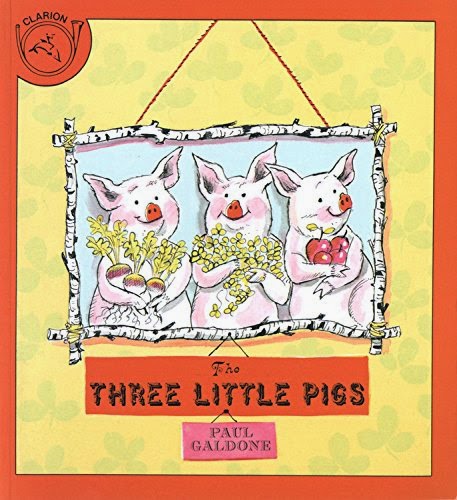
Last week we focused on The Three Little Pigs. First we read a classic version by Paul Galdone.

Amazon

In this version, the first 2 pigs get eaten up. The wolf tries to trick the third pig a number of ways before finally scrambling down the chimney. He ends up being boiled and eaten up by that pig.
There are so many great spinoffs from this tale. We read a few of my favorites.


The Three Little Fish and the Big Bad Shark by Ken Geist is hilarious! It's the classic tale retold and is a great way to compare characters and settings, while the plot remains the same. In the end, the poor shark's teeth fall out.

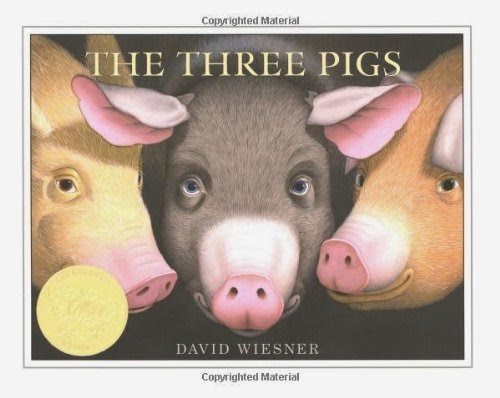
http://www.amazon.com/Three-Pigs-David-Wiesner/dp/0618007016/ref=sr_1_1?ie=UTF8&qid=1422377607&sr=8-1&keywords=david+weisner+3+pigs

David Weisner's illustrations are amazing. The Three Pigs won a Caldecott- another fun topic to talk with the kids about. The story begins as the classic tale, until the first pig gets huffed and puffed right out of the story. The pigs go on to fold the pages into paper airplanes, visit other familiar stories, and eventually enter back into their own story, inviting a dragon to join them and scare the wolf away.


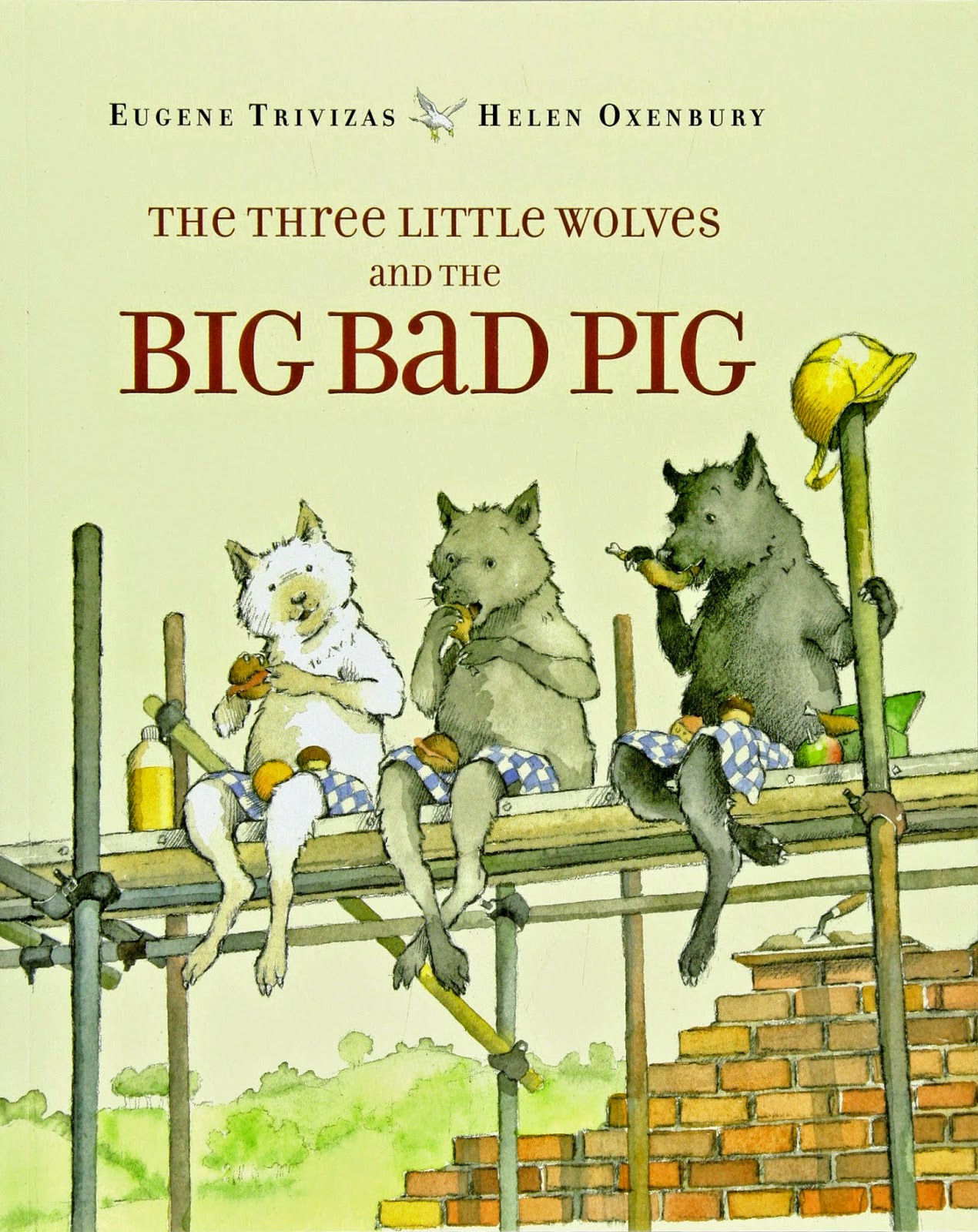
The Three Little Wolves and the Big Bad Pig by Eugune Trivizas is adorable.  The three fluffy, cuddly wolves can't seem to build a house that the big bad pig can't knock down. After three failed attempts, they decide to try something different. They build a house of flowers. As the big bad pig is huffing and puffing, he begins to smell the flowers and has a change of heart. He becomes friends with the wolves and they live happily ever after.


Finally, we read The True Story of the 3 Little Pigs by Jon Scieska. The kids have a hard time grasping this alternate point of view. They still want to see the wolf as big and bad, especially after he ends up "accidentally" killing and eating the pigs. It gives them some food for thought, at least.

Three Pigs Big Book


After reading the traditional tale, we created our own big book. I split the kids into groups of 3 (varying ability levels), and had them illustrate a certain part of the story. Here were the groups:
  1. Beginning: The mother waving goodbye to the three pigs.
  2. Middle: The first pig's house of straw being blown down.
  3. Middle: The second pig's house of sticks being blown down.
  4. Middle: The third pig's house of bricks NOT being blown down.
  5. End: The wolf coming down the chimney and the pig ready with a fire and a pot of water.


At first, a couple groups didn't understand that they were ONLY drawing one part of the story. They wanted to illustrate everything!


I asked them to add labels and write a sentence about what was happening in the picture.


When we were done, we sequenced the story, and I read it aloud. Then I laminated and bound the pages, and added it to our big book collection.


Storytelling Center


In our storytelling center this week, I added my wooden wolf & pigs that I found on Etsy. Love them!


I also added some bricks and sticks. I couldn't find anything to use for hay this year!

Sequencing the Story


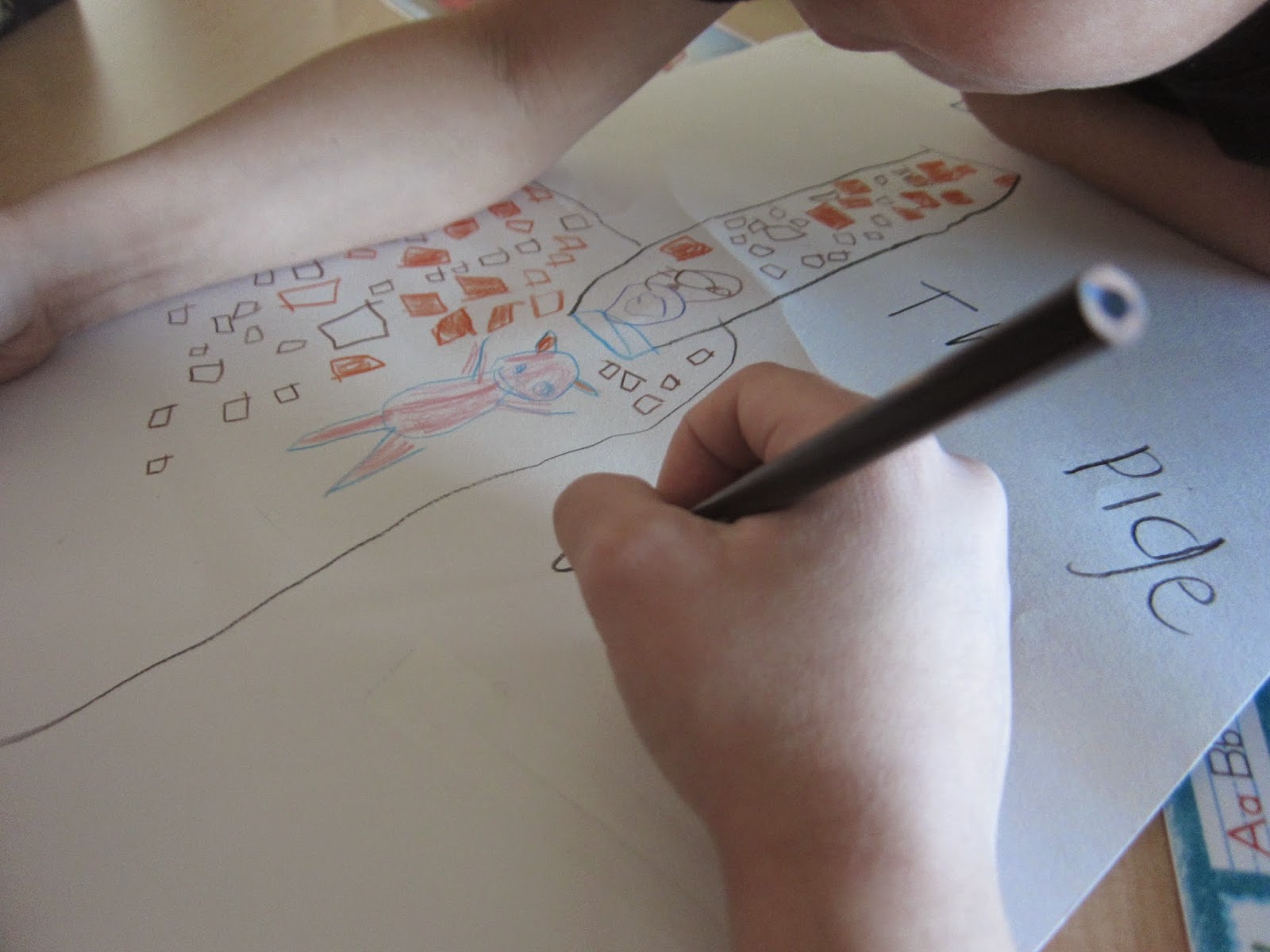
This idea is from Mrs. Goff's PreK Tales. I made a template for the kids with the 3 houses, and had them tear strips of yellow paper for straw and brown paper for sticks. Then they cut rectangles out of red paper for bricks. Each child had a quarter page of each color- and that was plenty. You can print my template below.


Retelling with Props


Love these simple props from Fairy Dust Teaching. I just used white sentence strips and stapled on the ears. The only problem is the interchangeability between the kids. Head size varies considerably in my class! 

Acting out familiar stories is something I really need to work on. This was one of our first attempts, and I guided them through everything. I just had 1 student who really put his all into it. The rest of the kids were very shy. I'm hoping with more practice, they'll get more comfortable with the process.

I left the props and book in the reading center for them to use during playtime, but they really didn't know what to do independently. Basically, they'd put the hats on, run around chasing each other a little, and take them off. Hoping this improves with more practice as well!

Rhyming Practice


This one is from The Kinder Garden.  I set up the chart, and then did a think, pair, share to come up with as many rhyming words as possible! Great peer tutoring for struggling rhymers!


The Little Red Hen

Wednesday, February 17, 2016 6 comments

January Weeks 1-2


Last week we started a study of fairy tales. This is the part of the year where we can really hone in on retelling skills, comparing texts, and understanding of story elements. Our first story was The Little Red Hen. Here are some of the activities we did.

First, we read a classic story of The Little Red Hen, and made a graph to show whether we would help the little red hen.


I love using stickies for graphs- it's so easy! I assumed everyone would say yes, but I learned I have a lot of lazy kids!

Next, we made a Little Red Hen -EN Word Family craft- the idea comes from Fairy Dust Teaching.


On each egg, we added an initial sound to make a word. Some examples I gave were hen, pen, and den. Most of them ended up being nonsense words, but that's okay too. It prompted a good discussion about what a vowel is, and why the words that started with vowels were so hard to read and sounded so funny! (like een, aen, oen).

Here are the templates I made for this project. Just click on each picture to enlarge it, and then drag it to your desktop to save it.


Next, we read The Little Red Hen Makes a Pizza. One of my favorite books!

We made a "Somebody, Wanted, But, So" Story Map.


On Friday, we read Cook-a-Doodle-Doo, and it didn't seem like the kids were too into it. It was quite long and wordy. But we voted on our favorite version of the fairy tale and this one came close to winning! 


To wrap it up, we did an activity where the kids copied my step-by-step directions to drawing the little red hen. I found these directions at Activity Village.


Next is The Three Little Pigs!


Book List


Our Favorite Red Hen books:

The Little Red Hen by Paul Galdone


 The Little Red Hen by  Lucinda McQueen


 http://www.amazon.com/Little-Red-Easy---Read-Folktales/dp/0590411454/ref=sr_1_3?ie=UTF8&qid=1456782220&sr=8-3&keywords=the+little+red+hen


The Little Red Hen Makes a Pizza by Philemon Sturges


Cook-a-Doodle-Doo! by Janet Stevens and Susan Stevens Crummell

http://www.amazon.com/Cook---Doodle-Doo-Janet-Stevens/dp/0152056580/ref=sr_1_1?s=books&ie=UTF8&qid=1456782351&sr=1-1&keywords=cook+a+doodle+doo